AI Policy Database
A comprehensive, automatically updating database of American artificial intelligence policy with over 4,000 entries across all 50 states, Washington D.C., and federal agencies.
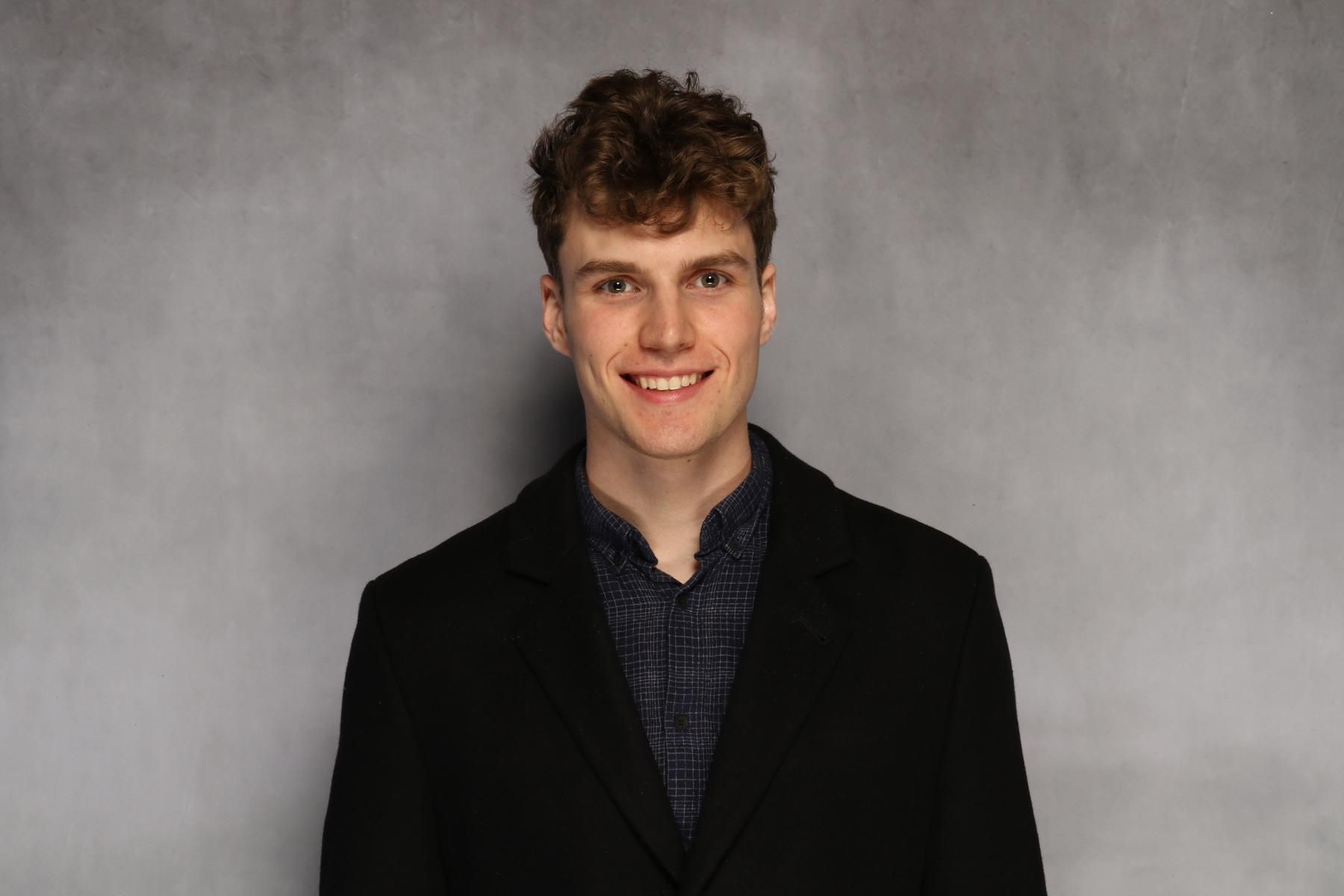
Tufts University · Class of 2025 · Summa Cum Laude
Richard Feynman famously wrote "What I cannot create, I do not understand." To that I would add "What I cannot integrate, I do not understand." To know something in isolation is trivia, to fit it into a deep web of meaning is true understanding. I'm interested in complex systems and interdisciplinary problems. I am constantly pushing the bounds of what I understand and what I can create.
My greatest driving force is curiosity. This force drives me to pursue understanding horizontally across disciplines, as well as vertically through the various layers of abstraction in complex systems.
I like to spend my time reading and thinking about science, technology, and philosophy, working on software projects, and pushing myself outside of my comfort zone to learn new things. I have found that the more I learn, the more rewarding it is to explore new territory. I'm constantly challenging what I think I know to gain a deeper understanding. I love being wrong, but never twice!
Though I find almost all problem domains riveting, the items that have most enduringly captured my attention tend to revolve around neuroscience, philosophy, and artificial intelligence. Particularly, I have found that exploring any one of these fields inevitably leads to highly valuable insights for the other two. I have come to believe these fields cannot be as easily partitioned as it may seem.
A comprehensive, automatically updating database of American artificial intelligence policy with over 4,000 entries across all 50 states, Washington D.C., and federal agencies.
An LLM-powered assistant that answers questions grounded in any number of provided textbooks or other source materials. Falls back to Perplexity-style web search when source material is insufficient, prioritizing accuracy over hallucination.
A model of the human inferior temporal cortex applied to digit recognition. Achieves high accuracy while rarely firing on random noise, behaving more like biological visual systems than typical ANNs.
A fully hand-built neural network with no ML libraries and written from scratch in C++. Implements the complete pipeline: preprocessing, prediction, backpropagation, and test set evaluation.
One question I keep returning to is how intelligent systems build useful representations. Starting from nothing but a continuous stream of high-dimensional, unlabeled, and noisy sensory data, brains can develop highly useful concepts, world models, and causal narratives. I believe this to be one of the most fundamental questions to understanding what intelligence is and how intelligent systems work, from brains to large language models.
Throughout recorded history, humans have always been the most intelligent beings around. Many theories of humanity have used various cognitive capacities uniquely possessed by humans as their fundamental bases. But what happens to our sense of individual and collective identity as advanced AI systems start to replicate these "uniquely human" capacities? I am interested in these kinds of questions, as well as how we can pursue a technological future that is good for humanity.
Most constructs in philosophy of mind fail to take neuroscientific advances into account. Many problems that seem to be purely philosophical are really interdisciplinary. I'm interested in neurally-informed approaches to problems surrounding free will, epistemology, consciousness, decision-making, moral responsibility, and human nature. I'm also interested in the consequences of such neuroscientific approaches on jurisprudence, political philosophy, and ethics.
Understanding how our brains work can inform everything from education and mental health to productivity and creativity. The public is increasingly interested in these topics, which has the potential to greatly improve public health and human achievement. I'm interested in exploring these applications and helping neuroscience go from the lab or clinic to the daily routine.
04 · Contact
I'm always interested in talking to passionate people. Whether you have an interesting problem you'd like to discuss, a project you'd like to collaborate on, or something you're curious about, don't hesitate to reach out.
zenomarquis13@gmail.com